Okay. it’s time to gather together the most common advice on writing and pound it into dust.
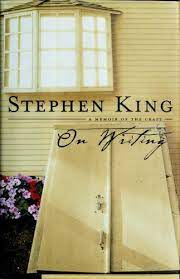
First, please note I am a tremendous admirer of those who do their craft well. Ernest Hemingway is perhaps my most powerful role model for writing, but so is Stephen King and a host of others. Reading the experts and taking their advice is an absolute necessity. King’s “On Writing” is a book I have “chewed, swallowed and digested” many times now (to borrow from the Bard’s Henry V.)
But there is one reoccurring piece of advice that inflicts the critical thinker with pause. If you’ve researched writing for any length of time, you have certainly heard the dogma of ‘write every single day’. King does this religiously, he says, as do many others. He’s also Stephen King.
I have issues with the plausibility of such a process for most of us.
Most folks who write these days do not have the luxury of being a fulltime writer. It’s just not in the cards. We have jobs and families that accompany us on this journey, along with the passion to write. We squirrel away every second we can on our writing projects, and are compelled to ‘craft’, as it were, nearly all the time we can spare. I do an amazing amount of my writing in my head all the time. Mostly it’s the macro stuff, but often a line comes to me unbidden and I have to add it to the proper place within my current work-in-progress as soon as I can.
The operative phrase there is “as soon I can.”
Some folks carry notebooks or use the note functions on their phones or tablets and, wow, that’s great. Most of my notes are like Stephen King – in my head and they bounce around there for a bit before the good ones eventually make their way into the draft. If the stuff is good, it won’t leave me until it’s dealt with.
But writing every single day? All I can say to that is “wouldn’t it be nice.”
I envy those who are able to do that, but that piece of advice seems to me to presume that writing is a drudgery we would never complete if we didn’t use some form of trickery on ourselves. Hey, if you work against externally imposed deadlines, it makes perfect sense. Pacing yourself there is a necessity, especially if time is tight. But most of us don’t have that issue to deal with.
My main problem with the advice is that it seems both tone deaf to the realities of life as well as heavy handed and manipulative, presuming we’re all lazy or unmotivated. It no doubt works well for those who never or rarely make the time, but for us writers whose stories clamor to be told, it’s nigh on useless. We write all the time, every spare opportunity, but we can’t always make ourselves slaves to a daily model. We don’t let the grass grow, and don’t need to be treated as children. When life happens to us, it happens. We probably can’t sit at the computer writing every day, but when we have a project we love, we’re pretty much always thinking about it. Hell, sometimes I can’t sleep from the ideas bouncing around in my head for making my novel better, deeper or richer.
Am I weird or alone in this? My Spidey Sense says no. For someone who is compelled within themselves to write, to tell their stories, to craft their masterpieces, such advice sounds ridiculous. We’re always working and don’t need a motivational pablum. And for those writers who struggle to make things happen? Passion, baby, that’s the key. Cultivate that and the problem soon vanishes. In the words of the immortal James T. Kirk, “when something’s important you make the time.” It often doesn’t fit into a neat and tidy format and I have issues with deluding either ourselves or the newcomers to the craft that it should.
Just write. When you can. Don’t let things lay for long. The fire that burns inside you to tell your story shouldn’t let you anyway.
If you don’t feel that . . . well, either find it or make it.
And maybe that’s the real advice that matters.
Discover more from R. C. Reid, Author
Subscribe to get the latest posts sent to your email.
 R. C. Reid, Author