One of the consistently correct pieces of advice I’ve tried to burn into my brain is the fact that people love books because of their characters, first, last and always. Folks tend to haunt their preferred genres, and a book’s premises may get them to pick it up initially, but only the characters keep them reading.
So, yeah, we have to get that right. Crystal clear, unique and memorable.
We could talk a long time about what’s needed to make great characters, but there is something to be said about the names we choose. Words mean things and names have a power all their own. Simplicity and meaning, connotation and history, power and charisma, all that can be bound up in a character’s name. And yet, cliché swims in the darkness surrounding our choices, and for every perfect name choice like James T. Kirk or Yennefer of Vengerberg, too often we see names we cannot help but cringe at. Names must speak, be expected and still unique, especially for the main characters we build our stories around.
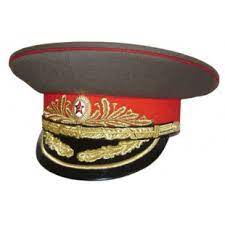
I began working on character names for Mother Russia long before I even had a title. I knew I wanted to craft a story set in Moscow during the three-day coup in August of 1991. I knew I wanted my main character to be a high-ranking Russian female KGB Director who discovers something she shouldn’t and needs to escape to the West. I also knew she would elicit the help of the Americans, who send a handsome and heroic assassin (who has baggage of his won, of course) and then things happen. That’s where it started.
I wanted my main protagonist’s name to sound Russian while implying beauty, grace and above all strength. I didn’t have to go through many options before settling on ‘Anastasia’ almost immediately. The name is common in Russia, recognizable in English and carries a romance reminiscent of the Romanovs without making any overt connection, something I wanted to avoid at all costs. (From Russia with Love has Tatiana Romanova and the Marvel Universe has Natasha Romanoff. Plus Amazon did a fairly-okay series entitled The Romanovs back in 2018. In popular culture, there’s Romanovs all over the place.)
My character goes by ‘Tasia’ throughout the book, avoiding (I hope) the comparisons between 50 Shades of Grey’s main character Anastasia ‘Ana’ Steele. Two syllables, nice and clean.
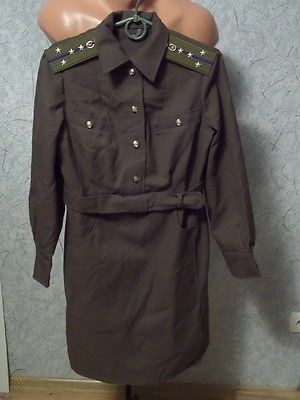
In the end, I gave Tasia the last name of Zolotova, which I pulled from a huge list of Russian surnames because it rolls off the tongue easily and begins with a ‘Z’ which should keep it memorable. She also has the middle patronymic of Alexandrova, meaning ‘daughter of Alexi’.
In researching Russian names, what we think of as a ‘middle name’ is actually a reference to the person’s father, a tradition proudly held even in modern times. Also Russian surnames are spelled differently whether a person is male or female, with an ‘a’ put at the end of the female version. Therefore Tasia Zolotova’s son (and primary antagonist for the story. Yeah, it’s complicated) is named Yuri Vladimirovich Zolotov. His first name was after Yuri Andropov, the famous mentor of the boy’s father, real life KGB Chairman Vladimir Kryuchkov, who fills the ‘master villain’ spot in the novel. Yuri’s patronymic means ‘son of Vladimir’ – even though he was illegitimate – and his surname is the masculine version of his mother’s.
KGB Major General Anastasia ‘Tasia’ Andreyvanova Zolotova . . . nice to make your acquaintance.
Next time we’ll talk about her American lover, Jonathan Cole.
Discover more from R. C. Reid, Author
Subscribe to get the latest posts sent to your email.
 R. C. Reid, Author