It’s Finally Here! Orders Are Live!

Well folks, the wait is finally over!

My debut novel, RED MOSCOW — one of the Top Picks for the 2024 Claymore Awards — is finally available for order from my awesome publisher, @jumpmasterpress!

Tightly framed within actual historical events, and featuring many real world figures, RED MOSCOW brings to life the last days of the Soviet Union and shows how two lovers – one Russian and one American – changed the course of history forever.

Order this amazing Cold War thriller today at https://bit.ly/redmoscowthriller!

#newauthor #JumpmasterPress #thriller #amwriting #ampublishing #thrillerbooks #thrillerwriters #authorsofinstagram #bookstagram #writerscommunity #writerswrite #writersofinstagram #spynovel #readersofinstagram #newbook #bookcommunity

Announcement Time!

Well, friends, it’s finally real.

I am delighted to announce that I have been signed as a new author with the great folks at Jumpmaster Press!

Yes, the Mother Russia series is finally going to see print and its first book, Red Moscow, will be published by Jumpmaster in 2025!

I want to thank Kyle, Gene and all the great folks at Jumpmaster for believing in me and my work and for agreeing for us to walk together into this great future! I’m delighted to be a part of their many excellent authors and look forward to communicating with them all in the coming days.

More to come of course . . . and check out their website (the place where new adventures start!) and their Facebook page for more great stuff!

Naming Conventions, Part 2

Okay, nothing like going back on one’s decisions to freshen the air in one’s head.

Yes, I’ve changed my mind completely, as related to my my previous post, and plan to return to my original naming conventions.

I don’t consider myself a wishy-washy person, but more of someone who takes influence from his peers and those he trusts. And I think time brings clarity of perspective too.

“Mother Russia” is a fine name for my first book, but a much better name for the series.

The story of how John D. MacDonald used colors in his titles to differentiate his Travis McGee series (at the suggestion of his publisher actually) has stuck with me like a bug on a windshield for some time now. The publishing business, like anyone will tell you, is a marketing-based industry. Whatever makes your books stand out and connect with your name and brand is a good thing. Also there’s no such thing as something completely original when it comes to book titles and the like.

Alma Katsu’s two books Red Widow and Red London seem to be doing well and I wish her all the success in the world. I don’t know her future writing plans, but here we are a year after they came out and I haven’t heard if she plans more installments with those characters or not. I’ve come to the conclusion it doesn’t matter. I have every confidence in my manuscript (and it’s already written sequel) so I plan to stick with my original naming conventions regardless of any similarities. The patterns may be similar, but the names are all different, and for me, that’s enough.

So . . .

Book 1 of the Mother Russia espionage series will be entitled “Red Moscow” . . .

Book 2 will be “Red Eagle” . . .

And Book 3 (which I just finished my initial scene-by-scene outline for) will be “Red Belfast”.

There. As Robin Williams once said, I feel so much better now.

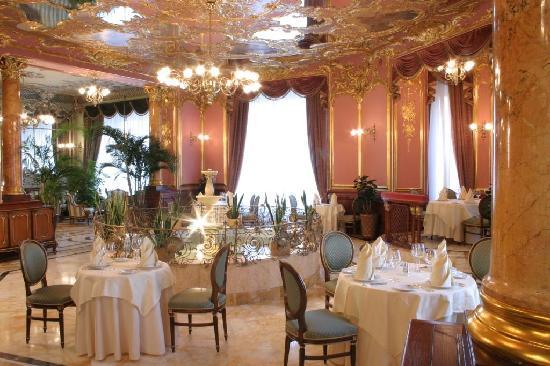
(The photo featured here is the dining room at the Savoy Hotel in Moscow, where something very important happens in Chapter 10 of Red Moscow. Tease, tease, tease!)

Naming Conventions, Part 1

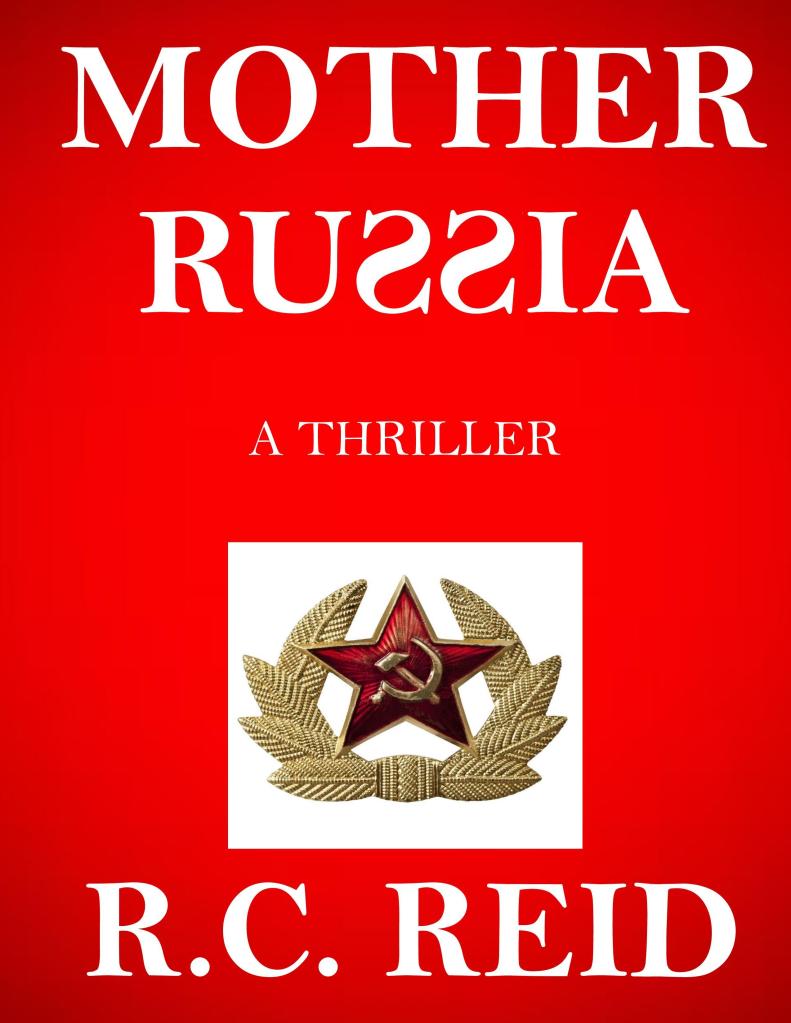
No, it’s nothing official. Just a temporary cover I made for fun.

A title sells a book in a way nothing else can. Cover art is a huge part of that, as are the blurbs on the jacket and inside the flaps, but it all starts with the title.

Getting that right is paramount.

In the traditional publishing universe, publishers constant change and tweak the titles of books. Let me state here, now and unequivocally that when my time comes, they have my fullest blessing to work their titular magic as they see fit. They know the genre and what works best. My job is to merely suggest and make certain whatever I do put forward leads the potential reader into being titillated enough to pick up, then investigate and hopefully buy it.

Mother Russia is the title of my forthcoming debut novel and as such has gone through many potential titles. I always wanted it to be hung on the hinges of the Soviet August Coup in 1991, so as such I flirted originally with the possibility of the title A Change Of Season. I suppose it reminded me of the title of the excellent movie A Dry White Season with Donald Sutherland and Marlon Brando, but that’s about as far as it went. Too milquetoast, too blah and unexciting, especially for a thriller.

Two word titles seem to be the norm for the thriller genre, and looking at Brad Thor for a model, the fewer the syllables, the better. Action and excitement need to be contained therein, and a promise of what to expect is essential. So I ended up renaming the book Red Moscow and that was it’s working title throughout the writing process. Red had multiple meanings in my genre: Soviet communism as well as blood, and it leaned into this as I wrote it, even to the point of having Tasia wear the perfume of the same name, which my research told me was enormously popular in Soviet Russia for decades. (I managed to acquire a bottle and it is indeed beautiful and enticing.)

Unfortunately, I couldn’t keep that title for the book.

In early 2023 I came to discover author Alma Katsu whose two debut espionage thrillers dropped that March, Red Widow and Red London. Wonderful titles nailed cleanly to the genre and which I hope which will become bestsellers. You should definitely purchase them. (Already ordered my own hardcover copies. Maybe I’ll run into Alma at some point and get them signed.)

Unfortunately, Red Moscow is simply too close to her titles. While bummed, I would not want to dilute either of our brands by utilizing similar title conventions. Such is life. So, I’ve gone back to the title I almost used before and which my beta readers liked best anyway: Mother Russia.

‘Mother Russia’ is my protagonist Tasia Zolotova’s nickname and is definitely a critical component of her story, especially on that all-important first day of the coup. Yes, it makes good sense.

While I was looking towards making ‘Mother Russia’ my series name, it may actually be easier to get there if I make it the title of the first book first and let things proceed logically from there. (Think of how George R. R. Martin’s A Game of Thrones made its way (slightly altered) into the title of the HBO series.) Also Mother Russia effortlessly leans into the genre with its second word while beautifully illustrating the presence of a female action protagonist with its first. A win-win.

On Muses, Mentors and Models

Learning a craft is something I think best attempted with the regular advice of experts. For me, this premise leads to three essential questions. Who is your muse? Who is your mentor? Who is your model?

I define a ‘muse’ as an inspirational person who provides me with insight. Someone who helps me properly create my content, so to speak.

A mentor is someone who gives advice to helps hone the mechanics and art of my craft. Usually it’s someone famous who wrote a lot about doing such.

And finally, a model is someone whose craft I wish to emulate. Style, word structure, flow, whatever.

So who are mine? Well, I’m glad you asked. First, the muse.

To me, a muse is someone who is g**da*m honest with you, as Robin Williams once said. No codling, no niceties, no handholding and no fantasies. Tell it like it is and don’t accept any whining.

For me, that person is Mercedes Lackey. She is the author of 133 published novels and counting, mostly in science fiction or fantasy. She’s a constant presence on Quora where I often lurk. That’s how I discovered her.

No, I’ve never met her or corresponded with her. There’s no real need. I just watch people ask questions about writing or getting published – some good and earnest, but most just ignorant or self-absorbed – and observe her pearls of wisdom. She’s got the credentials to know what she’s talking about and does not suffer fools.

She’s constantly telling someone why no one will ever pay them for the ideas in their head, why no one wants to read their memoirs and why thinking every-word-they’ve-written-is-inviolable just brands them as an idiot. She’s a full-on reality check, and I always follow her advice to keep from making stupid mistakes. We all need someone like that, don’t we?

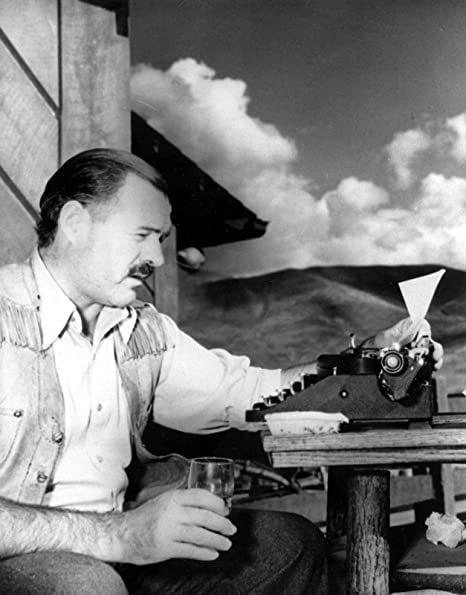
As for my mentors, I have two actually. I’ve sort of revealed one of them already, and that’s Ernest Hemingway. Papa advises me on craft details. He’s the sage, siren and Socrates. He taught me about writing just one true sentence. About using no unnecessary words. Why we must reduce dialogue tags. Show not tell, and so many other things. Yep, Papa still speaks, and as I tell folks, one of these days I’m gonna make his favorite hamburger.

My second mentor is the creator of Babylon 5J. Michael Straczynski, better known simply as Joe. I follow him on Twitter and have voraciously consumed nearly all of his work. (I just finished his autobiography, Becoming Superman, which I highly recommend.)

He’s written for nearly every channel you can imagine, but I think the best of his works are his most recent. His 2021 book Becoming a Writer, Staying a Writer is obviously all about Joe himself directly addressing the craft of writing to amateurs and wannabes like me. He cuts through the horse hockey since he learned all of his methods from nothing more than years of persistence and hard work. I highly recommend both of these books, along with any of his many other works, either on screen or in print.

And finally, my model. They guy I want to write like. The one whose mastery is unmatched and who I want to be like on the page. No, no, I don’t want to ape or copy him, I just want to make the words sing like he does. The color, the vibrancy, the splash. And for me that’s only one guy, the late, great John D. MacDonald.

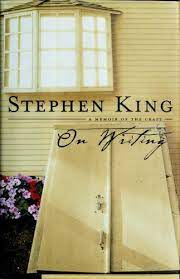
Stephen King claims MacDonald as his own hero, and while King does not give his own muse a name in his book On Writing, he does describe him, and wow, it sure sounds a lot like MacDonald to me. King called MacDonald “the great entertainer of our age, and a mesmerizing storyteller.” High praise from perhaps the best-selling fiction author in the entire world.

MacDonald is the creator of the Travis McGee series of crime/mystery novels which he began in 1964 and continued with until his death in 1986. He also wrote literally hundreds of other thrillers and mysteries beginning in the mid-Forties, all of which have sold well over 70 million copies, and which still sell well even today, nearly 40 years after his death. His Wikipedia article gives all his accolades, such as his winning the Mystery Writers of America’s highest honor, the Grand Master Award for lifetime achievement and consistent quality, way back in 1972.

I’ve recently started rereading the Travis McGee novels – in order this time to see the character’s evolution – and since I’m now reading with the eyes of an author, I am mesmerized by how this man wrote. Here’s a few of examples of MacDonald’s prose:

  • “We were about to give up and call it a night when somebody threw the girl off the bridge.” – Darker Than Amber, 1966
  • “Please not yet. Those are the three eternal words. Please not yet.” – A Deadly Shade of Gold, 1965
  • “When you see the ugliness behind the tears of another person, it makes you take a closer look at your own.” – The Green Ripper, 1979
  • “This was not some pretty little girl, coyly flirtatious, delicately stimulated. This was the mature female of the species, vivid, handsome and strong demanding that all the life within her be matched. Her instinct would detect any hedging, any dishonesty, any less than complete response to her – and then she would be gone for good.” – The Quick Red Fox, 1964

MacDonald was called the master of the opening line, something of critical importance for any fiction writer, and the quotation above from Darker Than Amber is one of those. I could go on and on, but you should really read his works for yourself. They’re nearly all available on Amazon either in print or eBook format. The Green Ripper is my favorite, but they’re all amazing exercises in pacing, character, language and prose. Yep, I wanna be like MacDonald.
Leaping Faith

Ah, the joys, pains and compulsions of writing.

If I had to use only one word to describe the process of writing it would be ‘compulsion’. Writers must write and so they do. Period. Format doesn’t matter, genre doesn’t matter, channel doesn’t matter. Writers feel compelled to craft a beautiful message that they believe others will find attractive. That’s what it’s all about, folks, and that’s all it is.

One of the greatest lyricists of the modern era, Don Henley of the Eagles once said that all (good) writing is a leap of faith. This is so true. A real writer (as opposed to a hack or a narcissist) believes that what they have to say will resonate with a great many other folks. As long as there is overt universal appeal, everything should work (assuming we learn the mechanics of the craft well.)

So how does one make the plunge? Well, if you’re like me, you start thinking of what the story is that you need to tell. Such should never be self-focused. (Unless you’re a celebrity, nobody wants to read your autobiography. NOBODY!) And to be honest, it absolutely needs to conform to the conventions of whatever genre you’re wanting to work in. (That was my first moment of epiphany.) Yes folks, there are definite expectations as to content, structure, format and even tropes that come with any given genre. Ignoring them is a sure fire way to failure.

I started thinking about my novel Mother Russia in late 2019 with the idea of doing some fan fiction that would give some form of completion to the Killmaster spy series of novels that I used to buy in the 1980’s. The series ended right along with the Cold War in 1990 after 26 years with no fanfare or closure. It seemed to me the ending of those two things at the same time reflected the perfect world change that could have been used to tell a good ‘final’ story. So I started playing around with ideas and researching the history. Next thing you know I’m focused in on the 1991 August Coup in the Soviet Union. I thought it would make a great backdrop from which to tell a good story. So I started planning things out. I got a friend who knew the series and the genre well to read my detailed synopsis (about 30,000 words) and he told me the idea had way too much potential and should not be wasted as fan fiction.

And so here we are. A year later and a the the first book is done and the second almost. They’re both ready and it’s been a fantastic explosion of creative joy. Yes, there will be more sequels utilizing the great (I think) characters I’ve created, so the party does not need to end. Who knows how the future will unfold? The process was worth every moment no matter what happens. I plan on continuing to play in this sandbox likely for the rest of my life. Even if only for my own enjoyment.

My advice? There’s tons out there and, yes, it’s sometimes hard to separate the good from the bad. Pinterest and Quora have been so helpful. Basic stuff there that keeps you from making those egregious amateur mistakes right off the bat.

Hemingway is my model and in my mind, he should be every fiction writer’s. Everyone who came after him has to address his style in some way. Embrace or reject, we all still have to work with the “furniture he placed in the room” as they said in the recent Ken Burns documentary. (Highly recommended by the way.) Reading, enjoying and learning from a master is essential and Papa was the best. He also spoke and wrote a lot about the craft. Absorb it all.

Beyond that – just write. Hone the craft. Learn what readers and publishers want and give it to them. Nothing you write is sacred and should be discarded or modified as your feedback dictates. There was only one Hemingway folks and he revised all of his works like a fiend. Mechanics matter. Rip any wish fulfillment or author insertion tendencies out by the roots. They reek like week-old fish guts and every reader can smell them from miles away. Make sure every scene has something relevant and important happening, even if it’s only in the conversation. Plot has to move, characters have to shine and that is a ‘both/and’ rule, not an ‘either/or’ one.

Above all, write as often as you can. Don’t ignore the compulsion. If you’re a real writer, in my opinion, you can’t anyway. Once the child of story inspiration is conceived, it’s a forever obligation. And a joy as well.

The Keys Of Conflict

As I learn more and more the craft or writing, I try and pay attention to what everyone seems to be saying about what readers want or need. Its easy to see the diversity of methods, or how finding what works for you is the only way to go, but that’s all method.

Message however, is far less forgiving or fungible.

A good story is a good story is a good story. It transcends genre, somehow explores the human condition and takes you somewhere new along with the characters it features. These are universal characteristics which must be present or no one will give a rat’s behind about what you’ve written.

But there’s also that marvelous little ingredient that gives everything else flavor — conflict.

Yup, no conflict, no story. Period, Amen, nothing else to see here.

When designing Mother Russia, I knew some of the conflicts that would occur. It takes place during the August Coup of 1991 in the midst of enormous societal upheaval, so just the air would be full of such things. From there, I needed to make it imminent for the main characters, but situational conflicts alone are transitory and fleeting. Yes, in a thriller they’re essential, so in Mother Russia they come one after another at a breakneck pace.

But the BEST conflicts are those between people. Characters who hopefully become real in our eyes as the story progresses. So yes, we need some personal conflict.

The romantic relationship between the two dual-protagonists is its own thing, and it grows and deepens as the story progresses, with each one realizing just how big a mistake they made twenty years ago by going back to their own worlds: the United States and the Soviet Union respectively. But the bigger source needed to be something more internal to each . . . in this case their romantic backstories.

The real main character, KGB Major General Anastasia Zolotova known as Tasia, has a backstory where she was once the mistress of KGB Chairman Vladimir Kryuchkov, a real person and one of the main architects of the August Coup. She and Kryuchkov share an illegitimate son who we learn through the course of the novel adores his father and (unbeknownst to her) detests Tasia, for reasons that are explored in the book. This makes the personal/familial conflict paramount while embedding them within the political and social upheavals taking place all around them.

To be honest, though, the better of the personal conflicts comes from Tasia’s American co-protagonist, CIA assassin Jonathan Cole. Jon’s personal conflict comes from the presence of his girlfriend Jessica ‘Jessi’ Milton and WOW! do things get complicated.

Like Jon, Jessi works for Eagle Group, the American assassination arm of the CIA and is Jon’s ‘handler’ on his assignments. During the course of their working together, they became secret lovers to the point they more-or-less live together with Jessi constantly urging Jon to get out of the business so they can begin a ‘normal’ life together. Jessi is with Jon during the first third of the novel, and while he truly cares for her, he has never been able to tell her that he loves her.

Things get moving when Tasia sends a message to the CIA, and Jon personally, asking for his help to extract her from Moscow. Jessi is present when Tasia’s son Yuri hands Jon the note Tasia wrote . . .

Yuri reached into his pants pocket, pulled out a piece of paper and handed it to Jon.

Edmund. It really is me. Please meet me at the Savoy for breakfast. You are the only person I can trust. Remember our promises in Marseille. I certainly do. Love always, Mercedes.

Jon read the note several times before speaking. “I presume you have read it?” he asked.

“Of course. Although the names make no sense to me.”

“Then you are not as well read as you should be,” Jon said. “If your mother did not explain, neither will I. Please give her this message from me. Word for word.”

“Very well,” Yuri said.

“Tell her I’m coming,” Jon said. “And that I love her too.”

Jessi made a noise like a cat being kicked across the room. Yuri’s constant smile left him for the briefest instant, replaced by something Jon could not identify. Something dark.

Jessi herself turned into a major character with her own heroic arc when she discovers something sinister going on here at home which will endanger everyone . . . (Pick up the book and find out!)

Characters . . . What’s In A Name? Part 2

When writing in the ‘espionage’ genre (or any genre for that matter) so many specific conventions litter the floor. Sometimes they’re simply reader expectations that must be met. Other times they’re tropes or clichés which could be embraced but perhaps should be avoided or even subverted. (I like the subversion part . . . if you can get away with it.)

One of the expectations in an action/espionage thriller is for the handsome heroic male character to be the main protagonist and to be somewhat molded in the ‘James Bond’ style. I knew right away when I began writing Mother Russia I wanted to go in a completely new and different direction. My main protagonist was going to be female – and not some gender-bending male-fantasy badass of some sort. I wanted a character who would hopefully introduce a new way of exploring the genre to the readers which was fresh, exciting and real. From there I decided, if I could create a compelling, deep and long-lasting romantic relationship for her it would give huge strength for the story, providing natural agency, motivation, pathos and believable emotions to the action which IMO the genre so often desperately needs.

In the end, I elected to go with both characters as quasi-dual leads, taking inspiration from a series which mined the relationship possibilities of dual protagonists to perfection.

I loved Diana Gabaldon’s characters of BOTH Claire AND Jamie in her Outlander series . . . in fact, her books work best when those two are together as a team (or trying to get back there anyway.) One of the most intriguing challenges of writing Mother Russia then became to create TWO fully formed characters, male and female, and give them both a reason to not only be together but to to become bonded to each other both here and in all future books. I wanted the relationship to define both of these characters, but especially the male, who I wanted women readers to care for (and often laugh at) while at the same time keeping him serious and relevant for male readers to admire and see themselves as.

So I decided I wanted a strong but common American name.

Cole was actually a fairly easy choice for his surname. Short, one syllable, easily recognizable and pronounced, generic American from wherever and easy for folks to refer to him by if they so chose. The inspiration for it actually came from the 1984 movie The Bounty with Anthony Hopkins and Mel Gibson. When the mutiny finally takes place in the movie and Bligh is awakened from his cabin by the mutineers, Hopkins screams over and over again for his bosun ‘Mr. Cole’, a moment so horrifically terrifying as filmed, it stuck with me years later. Go figure.

I went through common American first names for the character (Richard/ ‘Rick’ was an early contender) before quickly settling on Jon. Yes, it might be the most generic American name possible, which is why I made it short for Jonathan and spelled without the ‘h’. It just sounded right in my head, or rather in Tasia’s voice when she spoke of or to him.

Jon has many of the expected characteristics of the genre: lethal badass, absurdly handsome and possessing a serious hero complex. Instead of playing these as normative expectations, however, in Jon’s case they’re actually character flaws, things which prevent him from living a normal life which he only begins to realize in Mother Russia that he really wants. In fact, his ‘heroic lethal assassin’ qualities takes a back seat in the novel to his far more human and vulnerable side, especially as he gradually comes to realize Tasia is the real hero and leader in their relationship.

Tasia ends up calling him many other names as the novel progresses, something I had a blast playing with. When they first meet again after their twenty-plus year separation she calls him ‘Edmund’, a reference to The Count of Monte Cristo, the book they read aloud to each other in French during their week long hotel-bound affair back then. (He does call her ‘Mercedes’ as well.) She begins calling him ‘fucking American’ when things get tense, before finally discovering her preferred term shortly thereafter . . .

“Tasia, please don’t be like this,” Jon said. “I did what I had to do to save our lives.”

“I know that govnyuk,” she said. The blood was beginning to crust on his face and neck, making it difficult to wipe off.

“So ‘shithead’ is my new name now? I was growing rather fond of ‘fucking American’ actually.”

“I know what you were doing, govnyuk, and I am glad you succeeded,” Tasia said as she rubbed harder. “I am just not ready to forgive you for making me think you were abandoning me by dying.”

“Tasia, you should know I would never do that.”

“Should! Yes, I goddamn well should!”

After the two characters reunite, they stay together for the entirety of Mother Russia, with their relationship forming the backbone of why the reader should care about them. We want them together, especially because of their differences, even though Jon has a long-term girlfriend back home who turns out to be a major supporting character in her own right.

Did I mention things were complicated? More on that next time . . .

Characters . . . What’s In A Name? Part 1

One of the consistently correct pieces of advice I’ve tried to burn into my brain is the fact that people love books because of their characters, first, last and always. Folks tend to haunt their preferred genres, and a book’s premises may get them to pick it up initially, but only the characters keep them reading.

So, yeah, we have to get that right. Crystal clear, unique and memorable.

We could talk a long time about what’s needed to make great characters, but there is something to be said about the names we choose. Words mean things and names have a power all their own. Simplicity and meaning, connotation and history, power and charisma, all that can be bound up in a character’s name. And yet, cliché swims in the darkness surrounding our choices, and for every perfect name choice like James T. Kirk or Yennefer of Vengerberg, too often we see names we cannot help but cringe at. Names must speak, be expected and still unique, especially for the main characters we build our stories around.

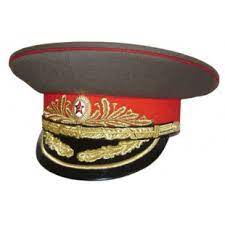
KGB General’s cap that Tasia wears at several points in the novel.

I began working on character names for Mother Russia long before I even had a title. I knew I wanted to craft a story set in Moscow during the three-day coup in August of 1991. I knew I wanted my main character to be a high-ranking Russian female KGB Director who discovers something she shouldn’t and needs to escape to the West. I also knew she would elicit the help of the Americans, who send a handsome and heroic assassin (who has baggage of his won, of course) and then things happen. That’s where it started.

I wanted my main protagonist’s name to sound Russian while implying beauty, grace and above all strength. I didn’t have to go through many options before settling on ‘Anastasia’ almost immediately. The name is common in Russia, recognizable in English and carries a romance reminiscent of the Romanovs without making any overt connection, something I wanted to avoid at all costs. (From Russia with Love has Tatiana Romanova and the Marvel Universe has Natasha Romanoff. Plus Amazon did a fairly-okay series entitled The Romanovs back in 2018. In popular culture, there’s Romanovs all over the place.)

My character goes by ‘Tasia’ throughout the book, avoiding (I hope) the comparisons between 50 Shades of Grey’s main character Anastasia ‘Ana’ Steele. Two syllables, nice and clean.

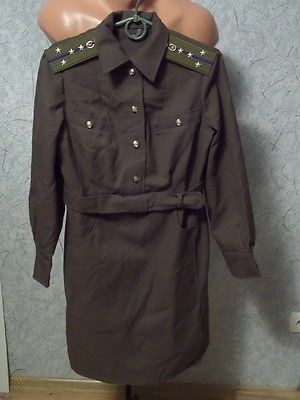
KGB Female Captain’s Everyday Uniform. Tasia’s would be much more ornate.

In the end, I gave Tasia the last name of Zolotova, which I pulled from a huge list of Russian surnames because it rolls off the tongue easily and begins with a ‘Z’ which should keep it memorable. She also has the middle patronymic of Alexandrova, meaning ‘daughter of Alexi’.

In researching Russian names, what we think of as a ‘middle name’ is actually a reference to the person’s father, a tradition proudly held even in modern times. Also Russian surnames are spelled differently whether a person is male or female, with an ‘a’ put at the end of the female version. Therefore Tasia Zolotova’s son (and primary antagonist for the story. Yeah, it’s complicated) is named Yuri Vladimirovich Zolotov. His first name was after Yuri Andropov, the famous mentor of the boy’s father, real life KGB Chairman Vladimir Kryuchkov, who fills the ‘master villain’ spot in the novel. Yuri’s patronymic means ‘son of Vladimir’ – even though he was illegitimate – and his surname is the masculine version of his mother’s.

KGB Major General Anastasia ‘Tasia’ Andreyvanova Zolotova . . . nice to make your acquaintance.

Next time we’ll talk about her American lover, Jonathan Cole.

The Best Time To Write

Okay. it’s time to gather together the most common advice on writing and pound it into dust.

First, please note I am a tremendous admirer of those who do their craft well. Ernest Hemingway is perhaps my most powerful role model for writing, but so is Stephen King and a host of others. Reading the experts and taking their advice is an absolute necessity. King’s “On Writing” is a book I have “chewed, swallowed and digested” many times now (to borrow from the Bard’s Henry V.)

But there is one reoccurring piece of advice that inflicts the critical thinker with pause. If you’ve researched writing for any length of time, you have certainly heard the dogma of ‘write every single day’. King does this religiously, he says, as do many others. He’s also Stephen King.

I have issues with the plausibility of such a process for most of us.

Most folks who write these days do not have the luxury of being a fulltime writer. It’s just not in the cards. We have jobs and families that accompany us on this journey, along with the passion to write. We squirrel away every second we can on our writing projects, and are compelled to ‘craft’, as it were, nearly all the time we can spare. I do an amazing amount of my writing in my head all the time. Mostly it’s the macro stuff, but often a line comes to me unbidden and I have to add it to the proper place within my current work-in-progress as soon as I can.

The operative phrase there is “as soon I can.”

Some folks carry notebooks or use the note functions on their phones or tablets and, wow, that’s great. Most of my notes are like Stephen King – in my head and they bounce around there for a bit before the good ones eventually make their way into the draft. If the stuff is good, it won’t leave me until it’s dealt with.

But writing every single day? All I can say to that is “wouldn’t it be nice.”

I envy those who are able to do that, but that piece of advice seems to me to presume that writing is a drudgery we would never complete if we didn’t use some form of trickery on ourselves. Hey, if you work against externally imposed deadlines, it makes perfect sense. Pacing yourself there is a necessity, especially if time is tight. But most of us don’t have that issue to deal with.

My main problem with the advice is that it seems both tone deaf to the realities of life as well as heavy handed and manipulative, presuming we’re all lazy or unmotivated. It no doubt works well for those who never or rarely make the time, but for us writers whose stories clamor to be told, it’s nigh on useless. We write all the time, every spare opportunity, but we can’t always make ourselves slaves to a daily model. We don’t let the grass grow, and don’t need to be treated as children. When life happens to us, it happens. We probably can’t sit at the computer writing every day, but when we have a project we love, we’re pretty much always thinking about it. Hell, sometimes I can’t sleep from the ideas bouncing around in my head for making my novel better, deeper or richer.

Am I weird or alone in this? My Spidey Sense says no. For someone who is compelled within themselves to write, to tell their stories, to craft their masterpieces, such advice sounds ridiculous. We’re always working and don’t need a motivational pablum. And for those writers who struggle to make things happen? Passion, baby, that’s the key. Cultivate that and the problem soon vanishes. In the words of the immortal James T. Kirk, “when something’s important you make the time.” It often doesn’t fit into a neat and tidy format and I have issues with deluding either ourselves or the newcomers to the craft that it should.

Just write. When you can. Don’t let things lay for long. The fire that burns inside you to tell your story shouldn’t let you anyway.

If you don’t feel that . . . well, either find it or make it.

And maybe that’s the real advice that matters.